
The safer way to secure your patients.

Watch SafeTuck in action

SafeTuck

Surgical Restraint Device

Properly securing a patient’s limbs is one of the most critical steps in pre-operative preparation, directly impacting both patient safety and surgical efficiency. Despite advances in surgical technology, operating rooms around the world continue to use sheets and towels to secure patients’ arms and legs. This outdated method is inefficient, inconsistent, and long overdue for innovation – this technique has not changed in over 50 years… Until Now!

icon to reduce turnaround times

Reduce Turnaround Times

Current techniques to secure limbs can take up to 10 minutes. Limbs can be secured using the SafeTuck system in as little as 1 minute.
icon for saving money

Reduce Costs

Safetuck eliminates the need for disposable padding saving between $500 - 1000/month/OR.
icon for reducing patient risk

Reduce Patient Risks

SafeTuck is designed to prevent patient injuries related to limbs falling from the OR table during surgery.
icon for easy intraoperative arm access

Easy Intraoperative Arm Access

SafeTuck allows anesthesia providers easy intraoperative access to tucked arms to evaluate or start IVs or Arterial lines.
safetuck logo

Solving Problems in the Operating Room

SafeTuck is an easy-to-use surgical restraint device that secures patients' arms and legs quickly and easily. SafeTuck attaches effortlessly to the rail of the OR bed and consists of a linkage based system that wraps around a patient's limbs and then locks into place by a simple lever.

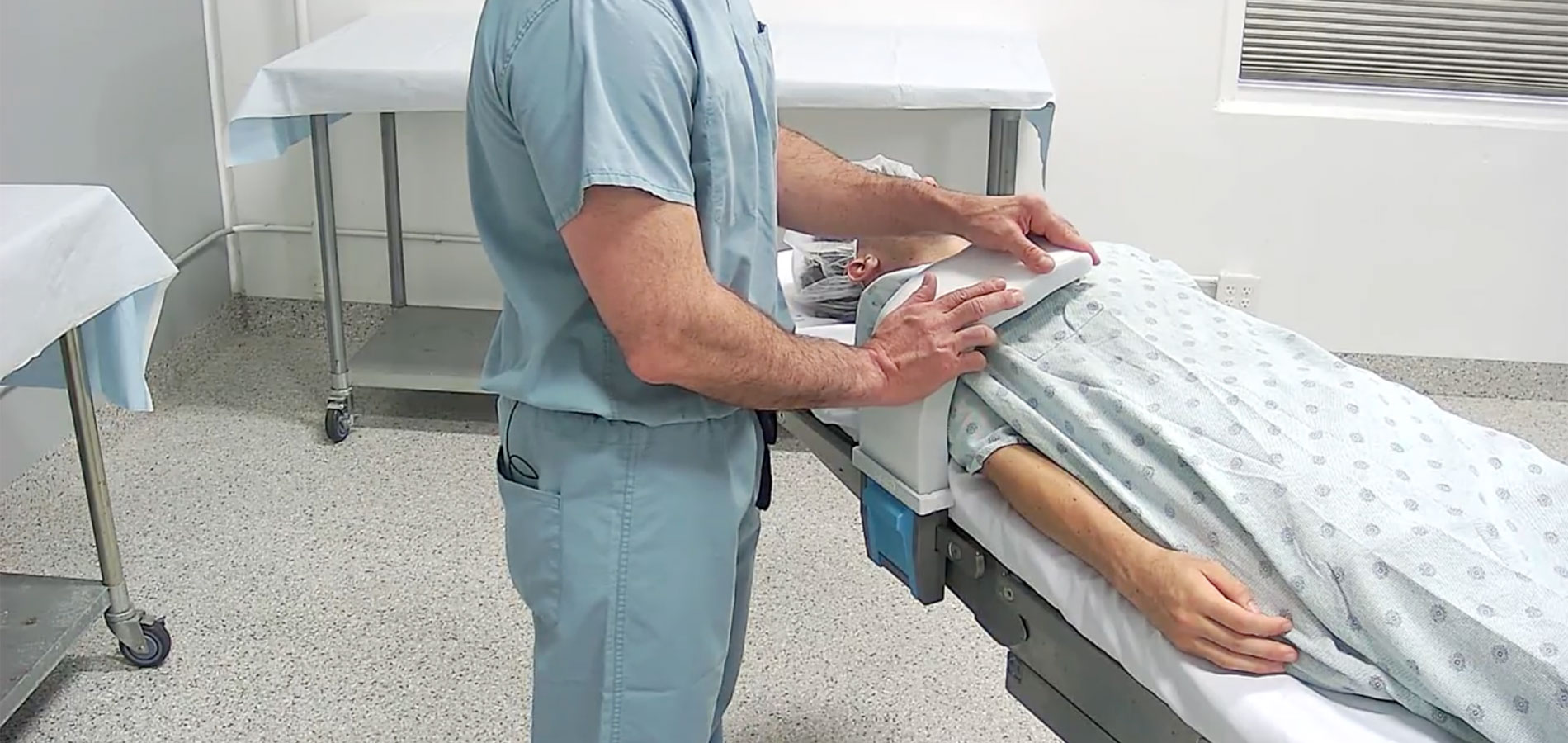
the safetuck device being secured in place on a hospital bed

Benefits of SafeTuck

SafeTuck was designed to rapidly and securely position arms and legs to improve turnaround times and ensure limbs to do not fall loose during the surgical procedure. SafeTuck also allows staff to rapidly secure the nonoperative leg during orthopedic procedures.

SafeTuck allows anesthesia or nursing staff to easily access a limb during surgery.  If an IV infiltrates, an additional IV or an arterial line needs to be started, the arm can be easily accessed and rapidly and safely resecured using the SafeTuck System.

SafeTuck has integrated foam padding which eliminates the need for disposable foam pads and additional linen to tuck arms.  The SafeTuck armboards allow for the elimination of disposable velcro straps currently used to secure arms.  These improvements alone account for thousands of dollars every year in addition to the large amount of soft savings related to improved workflow and turnaround time. 

Both arms and legs frequently fall from the operating room table during surgery.  This can lead to severe limb injuries including skin tears as well as nerve, vascular and joint injuries.  These injuries are considered ’NEVER EVENTS’ by CMS frequently resulting in citations by CMS and JCAHO or DNV in addition to potential litigation.  We envision eliminating these injuries completely with the implementation of the SafeTuck system.

SafeTuck improves OR function as the device is stored on the bed for every case, allows for arms to be secured by one staff member and eliminates the need for restocking the disposable items no longer needed for positioning.

SafeTuck has a reusable cover with integrated padding.  This allows facilities to help eliminate the waste of the millions of foam positioning pads disposed of every year.

94.1% of survey respondents are extremely or very likely to recommend SafeTuck as standard of care in their OR

Watch SafeTuck in Action

Safe. Simple. Secure.
Are you ready to bring your innovation to your OR with SafeTuck?

Our team is here to help. Contact us to learn more about our products and whow they can support your facility.

100%

Of users would recommend SafeTuck in their OR

safetuck wrist protection

100%

Of users saved time gathering supplies.

two surgeons tucking a towel under a patient's arm

84.2%

Of users stated reduction in waste.

a hospital bed with crumpled disposable materials

Inventor Spotlight

"SafeTuck was designed to ensure a faster, safer, and more cost-effective way to solve a problem that's existed for years - particularly at a time when hospitals are under increasing pressure to provide better care at a lower cost with less staff."